(Capsicum annuum)
No occupation is so delightful to me as the culture of the earth, and no culture comparable to that of the garden
-Thomas Jefferson
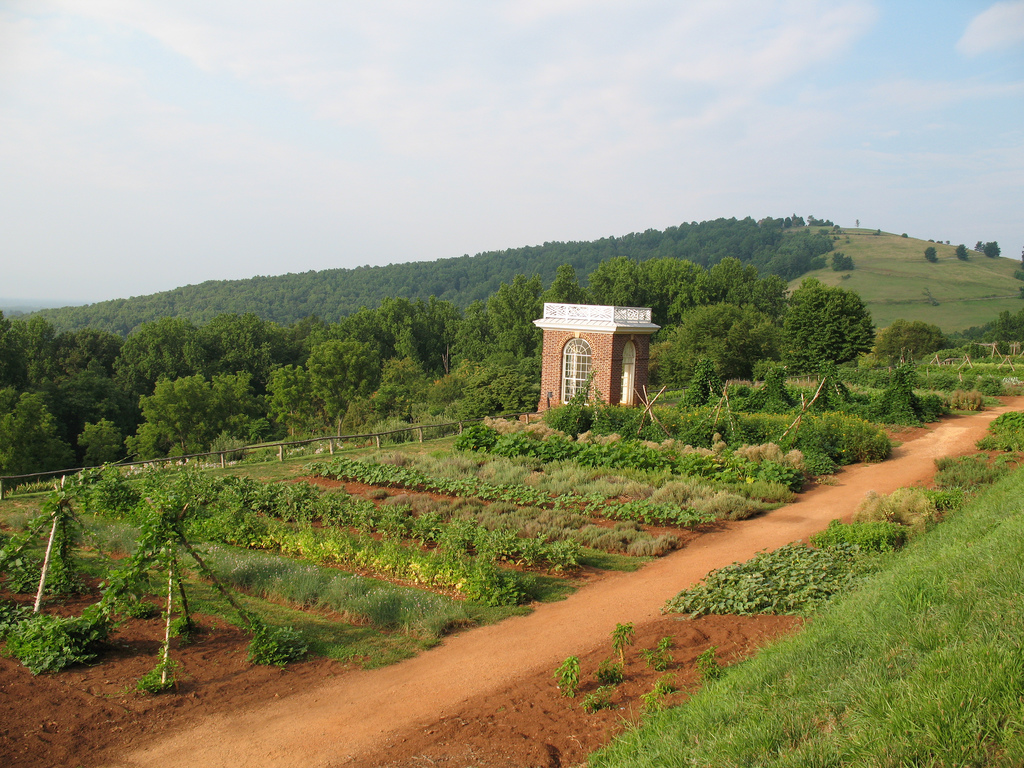
To see Thomas Jefferson's writing, people have to visit a museum. To see vegetables from Jefferson's garden, people just need to plant them. Jefferson planted 330 vegetable varieties in his two-acre garden in Monticello and garden enthusiasts can purchase one of those varieties, the Bull Nose bell pepper at several seed retailers today.
Introduced to North America in 1759 from India, the Bull Nose became popular in the 1800s. Amelia Simmons mentioned the variety in American Cookery, the first cookbook written by an American.* The four-lobed pepper boasts a thick skin that ripens from green to red like most bell peppers, and has an interesting taste. The flat flesh is sweet while the inner ribs can be hot, but these variations of heat depend on growing conditions.

Several of these seeds are germinating and preparing for transplant into our pepper garden. Yes, I like peppers that much.
*I have to mention this quote about American Cookery from the Historic American Cookbook Project of Michigan State University: "The importance of this work cannot be overestimated. Its initial publication...was, in its own way, a second Declaration of American Independence."
Image credit: Mr. T in DC
To see Thomas Jefferson's writing, people have to visit a museum. To see vegetables from Jefferson's garden, people just need to plant them. Jefferson planted 330 vegetable varieties in his two-acre garden in Monticello and garden enthusiasts can purchase one of those varieties, the Bull Nose bell pepper at several seed retailers today.
Introduced to North America in 1759 from India, the Bull Nose became popular in the 1800s. Amelia Simmons mentioned the variety in American Cookery, the first cookbook written by an American.* The four-lobed pepper boasts a thick skin that ripens from green to red like most bell peppers, and has an interesting taste. The flat flesh is sweet while the inner ribs can be hot, but these variations of heat depend on growing conditions.
Image credit: Hozae
Several of these seeds are germinating and preparing for transplant into our pepper garden. Yes, I like peppers that much.
*I have to mention this quote about American Cookery from the Historic American Cookbook Project of Michigan State University: "The importance of this work cannot be overestimated. Its initial publication...was, in its own way, a second Declaration of American Independence."

